
The single biggest predictor of a productive Pre-IND meeting is having a near-final, discipline-organized briefing package with prioritized questions ready before you even request a date. FDA requires that package no later than 30 days before the scheduled meeting, which means your real deadline is roughly six to eight weeks earlier: the day you assign owners for CMC, nonclinical, and clinical summaries plus a draft protocol synopsis. Miss that internal window, and you're negotiating with a calendar that doesn't bend.
TL;DR:
- Submitting a near-final briefing package six to eight weeks before the meeting is crucial to meet the 30-day FDA deadline and avoid postponements.
- The package should be limited to no more than 300 pages, focusing on clear summaries rather than extensive raw data, to ensure FDA review.
- Drafting a detailed, discipline-specific set of questions grouped by review area significantly improves the chance of receiving precise FDA guidance.
- Choosing the appropriate meeting format—multidisciplinary, CMC-specific, or written response only—can save time and streamline the process.
- Proper planning, clear roles, and early coordination with FDA review divisions prevent common delays and maximize the value of the Pre-IND meeting.
Table of Contents
- What a Pre-IND Meeting Actually Is and When to Request One
- Timeline and Scheduling: What Happens After You Submit the Request
- Drafting the Meeting Request Letter and Setting the Agenda
- What Goes Into the Briefing Package: Section by Section
- Writing Questions FDA Can Actually Answer
- Running the Meeting and Turning FDA's Advice Into Action
- Where Pre-IND Preparation Usually Breaks Down
- The Operational Fix Most Teams Miss
- When to Push for the Meeting vs. When to Wait
- Get Pre-IND Preparation Off Your Critical Path
- Key FDA and NIH Resources Worth Bookmarking
- Sources
- FAQ
What a Pre-IND Meeting Actually Is and When to Request One
A Pre-IND meeting is a Type B meeting, an early, formal conversation with FDA designed to resolve specific, unresolved development questions before you file an IND. The NCATS toolkit frames it as a chance to guide your trial strategy, not a rubber stamp on work you've already decided to do.
That distinction matters because a meeting isn't automatically the right move; for oncology teams seeking to optimize their development strategies, operationalizing adaptive clinical trials in cancer can provide innovative approaches beyond standard interactions, as detailed by the Hippocratic Cancer Research Foundation. If your open questions are already answered by existing FDA guidance documents, you don't need a meeting. You need better guidance research. Save the meeting slot for issues genuinely requiring agency judgment, like a novel endpoint, an unusual patient population, or a manufacturing process without clean precedent.
Once you decide a meeting is warranted, you'll typically choose among a few formats:
- Multidisciplinary meetings bring CMC, nonclinical, clinical, and sometimes statistical reviewers together, best when your open issues cross disciplines (a dosing question tied to a formulation constraint, for example).
- CMC-specific meetings narrow the scope to manufacturing and control questions, useful when your clinical and nonclinical packages are settled but your process development still has gaps.
- Written Response Only (WRO) meetings skip the live discussion entirely. FDA answers your questions in writing on the same timeline, appropriate when your questions are narrow enough that a live back-and-forth adds little.
Choosing WRO over a live meeting can save weeks of scheduling friction when your questions don't need real-time negotiation.
Timeline and Scheduling: What Happens After You Submit the Request
FDA works on a fixed clock once your written meeting request lands, and every date downstream depends on that first submission. The agency confirms whether it will grant the meeting, and under what format, within about 21 days of receiving your request. Type B meetings, which cover Pre-IND interactions, are then scheduled to occur within 60 calendar days of that same request date, according to FDA's formal meetings guidance.
The briefing package itself carries its own hard deadline: it must reach FDA no later than 30 days before the scheduled meeting date. Miss that window and the meeting is at real risk of cancellation or postponement. In the days leading up to the meeting, FDA's Office of Therapeutic Products often sends preliminary written comments 24 to 48 hours beforehand, and if those written answers fully resolve your questions, you can cancel the live meeting and rely on the written record instead.
| Milestone | Timing | Source |
|---|---|---|
| FDA decision on meeting request | ~21 days after request received | FDA formal meetings guidance |
| Type B meeting scheduled | Within 60 calendar days of request | FDA formal meetings guidance |
| Briefing package deadline | No later than 30 days before meeting | FDA formal meetings guidance |
| Preliminary written comments | Typically 24 to 48 hours before meeting | OTP Pre-IND Meetings |
Work backward from that 30-day submission deadline. A near-final draft should exist six to eight weeks before your desired meeting date, which is exactly the internal timeline the SBIA FAQ recommends when proposing a meeting date in the first place.
Drafting the Meeting Request Letter and Setting the Agenda
Your meeting request letter does two jobs at once: it tells FDA what you need, and it determines which reviewers show up. Get either wrong and you'll spend your allotted time explaining context instead of getting answers.
- Identify the product clearly. Name the drug substance, mechanism, and proposed indication in the first paragraph, not buried on page three.
- State your meeting objective in one sentence. FDA reviewers triage requests fast; a vague objective gets a vague response.
- Propose specific dates. The SBIA guidance suggests proposing a date six to eight weeks out, which gives the division enough runway to staff the meeting with the right disciplines.
- List your attendees by role, not just name and title. FDA wants to know who's presenting each topic.
- Request specific FDA disciplines. If your top concern is a novel excipient, say so, and ask that a CMC reviewer with relevant experience attend.
- Attach a draft list of questions grouped by discipline. This is the single biggest lever for getting the right reviewers assigned, since FDA staffs meetings based partly on the questions you submit.
Finding the right division to send this to isn't always obvious, especially for novel modalities that could fall under multiple review offices. When in doubt, call the division's regulatory project manager (RPM) directly before submitting; a five-minute conversation can save weeks of routing delays.
Pro Tip: Send your draft questions with the meeting request itself, not just in the briefing package. FDA uses those draft questions to decide which subject-matter experts to assign, and a late-arriving question list can mean the wrong reviewers show up on meeting day.
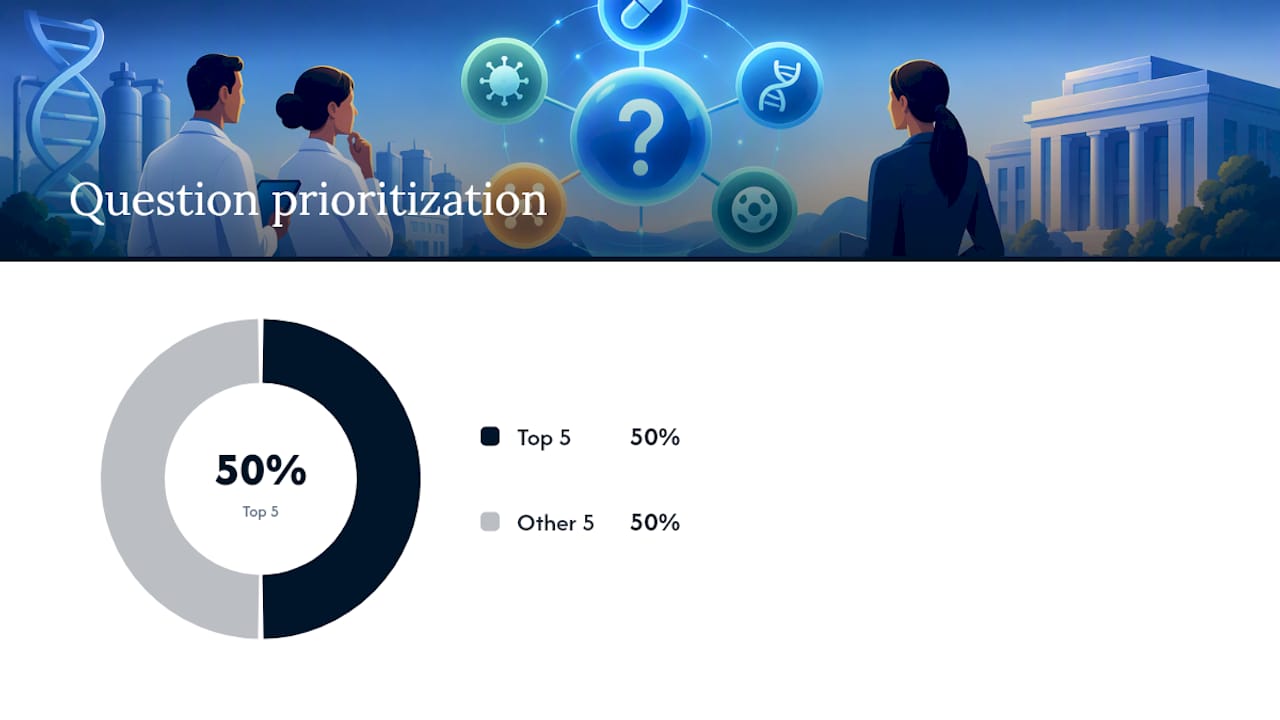
Once the meeting is confirmed, build your agenda around time per question, not time per topic. A 60-minute meeting typically supports up to about ten questions total, including sub-questions, so rank your list and prioritize issues needing agency agreement. Anything you could answer yourself with more internal analysis doesn't belong in the top five.
What Goes Into the Briefing Package: Section by Section
The briefing package is the document FDA actually reads before the meeting happens, and its quality determines whether your questions get thoughtful answers or generic boilerplate. OTP guidance is blunt about size: typical packages run 50 to 100 pages, and the agency will not commit to reviewing anything beyond roughly 250 to 300 pages. More data isn't the goal. Better-summarized data is.
Administrative components come first and are easy to underweight:
- Cover letter stating the meeting request date, product name, and meeting type
- Form 1571, the IND application form referenced even at the pre-IND stage
- Table of contents with sequential page numbers and bookmarks for electronic navigation
- An archival copy retained internally in case FDA requests clarification post-submission
CMC content needs to connect your manufacturing story to your clinical material, not just describe the process in isolation:
- Description of the active pharmaceutical ingredient, including synthesis or expression system
- Manufacturing and control summaries covering critical process parameters
- Stability data supporting the proposed shelf life and storage conditions
- Assay methods and specifications, with a clear link between the batches tested and the material intended for clinical use
Nonclinical content should read as a rationale, not a data dump:
- Summarized in vitro and in vivo toxicology findings, organized by study rather than by raw data table
- Study design rationale, including why specific species were chosen
- Key safety endpoints and how they map to the proposed clinical starting dose
Clinical content is where your draft protocol synopsis lives:
- Draft protocol synopsis covering study design, objectives, and population
- Dose justification tying nonclinical exposure margins to the proposed human starting dose
- Inclusion and exclusion criteria, monitoring plan, and primary/secondary endpoints
- Pediatric study considerations, even if the answer is a rationale for deferral
On formatting, follow the SOP guidance on meeting information packages: file the background section under CTD Module 1, Section 1.6.2, use sequential pagination and bookmarks throughout, and submit through the Electronic Submissions Gateway when your organization is set up for it.
A package running past 300 pages is a self-inflicted wound. OTP has explicitly said it won't commit to reviewing packages beyond that range, which means every page past the useful summary is pure risk with zero upside.
Writing Questions FDA Can Actually Answer
The questions section is where most Pre-IND packages fall apart, not because sponsors ask bad questions, but because they ask several questions stitched into one. "Is our nonclinical package sufficient, and do you agree with our proposed starting dose, and are there any concerns with our formulation?" isn't one question. It's three, and it will get one muddled answer covering none of them well.
Keep every question single-issue. Phrase it specifically enough that FDA can answer yes, no, or with a defined condition, rather than opening a philosophical discussion. Avoid open-ended framing like "What does FDA think about our overall development strategy?" That invites a non-answer.
A useful way to rank candidate questions is regulatory risk multiplied by data gap multiplied by program impact: how much does the answer change your path, how much uncertainty currently exists, and how badly would a wrong assumption hurt your timeline. Questions that score high on all three go at the top of your list.
Group questions by discipline and order them CMC first, then nonclinical, then clinical. This mirrors how FDA typically staffs the meeting and keeps the conversation from jumping back and forth between review teams.
- Weak: "Is our toxicology program adequate for a Phase 1 trial in healthy volunteers?"
- Stronger: "Does the division agree that the 13-week rat and dog toxicology studies support a starting dose of 10 mg based on the 1/10th NOAEL calculation described in Section 4.2?"
The second version gives FDA a specific number, a specific rationale, and a specific yes/no decision point.
Pro Tip: Draft twice as many questions as you plan to submit, then cut ruthlessly to your top ten. The questions you eliminate often reveal which issues you can resolve internally, which is valuable information even before the meeting happens.
Running the Meeting and Turning FDA's Advice Into Action
Meeting day works best with clearly assigned roles decided in advance, not improvised in the room. Assign one person as lead moderator to keep time and manage the agenda, technical subject-matter experts to answer questions in their specific discipline, and a dedicated note taker whose only job is capturing what FDA actually says, not participating in the discussion.
- Review FDA's preliminary written comments as soon as they arrive, typically 24 to 48 hours before the meeting, and decide as a team whether any question is now fully resolved.
- Reallocate meeting time toward unresolved questions rather than re-litigating points FDA already answered in writing.
- Assign each question to a single speaker ahead of time so FDA hears one clear voice per topic instead of a group scramble.
- Capture verbatim agreements, especially any language FDA uses around "acceptable" or "sufficient," since that phrasing often becomes the basis for your IND submission strategy.
- Draft meeting minutes within 24 to 48 hours while the discussion is fresh, then circulate them internally for accuracy checks before finalizing.
- Assign action items with named owners and dates, not just a list of things "the team" needs to follow up on.
The meeting minutes you produce, alongside FDA's own official minutes when issued, become part of the administrative record referenced later in your IND. Treat that document with the same rigor as the briefing package itself.
Where Pre-IND Preparation Usually Breaks Down
Most cancelled or delayed Pre-IND meetings trace back to the same handful of causes, and none of them are exotic. A late briefing package is the most common: miss the 30-day deadline and you're negotiating a new date, not a grace period. Insufficient CMC detail is next, particularly when sponsors describe a manufacturing process in general terms instead of linking specific batches to specific clinical lots. Overly broad questions round out the list, forcing FDA to either guess at your intent or send back a request for clarification that eats into your scheduled time.
Reviewers also watch for a few red flags that can escalate a routine Pre-IND interaction into a clinical hold discussion down the line: unexplained gaps in toxicology species selection, dose justification that doesn't tie back to nonclinical exposure margins, and protocol synopses missing basic safety monitoring detail.
| Phase | Action | Owner |
|---|---|---|
| Before requesting the meeting | Confirm the meeting is necessary; draft near-final CMC, nonclinical, and clinical summaries | Program lead |
| At request submission | Send meeting request with proposed agenda and draft discipline-grouped questions | Regulatory affairs |
| 6 weeks before meeting | Finalize protocol synopsis and dose justification | Clinical and nonclinical leads |
| 30 days before meeting | Submit complete briefing package via ESG | Regulatory affairs |
| 24 to 48 hours before meeting | Review FDA's preliminary written comments; adjust agenda | Cross-functional team |
| Within 48 hours after meeting | Draft internal minutes and assign action items | Meeting moderator |
The Operational Fix Most Teams Miss
Most Pre-IND delays aren't caused by bad science. They're caused by cross-functional handoffs that stall: CMC finishes its section two weeks after nonclinical, clinical is still waiting on a dose-justification number, and nobody owns the final assembly. Embedding an expert reviewer directly into that workflow, rather than reviewing a "finished" draft at the end, catches misalignment while there's still time to fix it.
AI-assisted drafting tools can pull first-pass summaries from existing study reports and CMC documentation, cutting the manual transcription work that eats weeks of a regulatory writer's time. The real gain isn't the drafting speed itself. It's the governance cycle around it: a fixed weekly review cadence, one accountable owner per section, and a change log that stops last-minute edits from breaking the document's internal consistency two days before the 30-day deadline.
When to Push for the Meeting vs. When to Wait
If your open questions are genuinely novel and unanswered by existing guidance, request the meeting even if your package feels 90% ready. FDA's clock rewards early requests, and a slightly imperfect package submitted on time beats a perfect one submitted late. If your gaps are more about internal uncertainty than genuine regulatory ambiguity, spend another month gathering data instead. And if your remaining questions are narrow and factual, ask for a Written Response Only meeting.
Investor pressure to move fast is real, but a canceled meeting from a late package costs more calendar time than the extra month you'd spend getting the questions right. Align your team on which category you're in before you draft the request letter, not after.
— John
Get Pre-IND Preparation Off Your Critical Path
The teams that walk into a Pre-IND meeting well prepared usually aren't working harder than everyone else. They've just removed the cross-functional bottlenecks that turn a six-week package build into a three-month scramble. That's the specific gap Haiphai's operating partnership closes: instead of handing you another drafting tool, Haiphai embeds directly into your regulatory and clinical operations to identify where CMC, nonclinical, and clinical handoffs are actually stalling, then rebuilds that workflow around AI-assisted drafting with real governance behind it.
That means your briefing package moves through review, integration, and final formatting on a schedule you control, not one dictated by whichever team finishes last. Haiphai's clinical and regulatory operations support covers everything from CMC summary drafting to meeting rehearsal and RPM coordination. Your team walks into the meeting room with a package that's already been stress-tested against the kind of questions FDA actually asks. If you're weighing whether to build this capability internally or bring in an embedded partner, Haiphai's decision framework is a useful starting point. Start with a diagnostic conversation about where your current Pre-IND timeline is at risk.
Key FDA and NIH Resources Worth Bookmarking
A handful of primary sources cover almost everything a regulatory team needs for Pre-IND planning, and they're worth keeping open in a browser tab through the whole preparation cycle.
- FDA's formal meetings guidance sets the governing rules for meeting timing, request content, and briefing package expectations across all PDUFA products.
- The OTP Pre-IND Meetings page gives division-specific detail on package length, preliminary comments, and cancellation risk for therapeutic products.
- The SBIA FAQ on Pre-IND meetings answers the practical logistics questions small and mid-size sponsors run into most often.
- The NCATS Pre-IND toolkit offers an accessible framing of when a meeting adds real value versus when it doesn't.
Sources
- Guidance for Industry: Formal Meetings Between the FDA and Sponsors and Applicants of PDUFA Products
- OTP Pre-IND Meetings
- Small Business and Industry Assistance: Frequently Asked Questions on Pre-IND Meetings
- Preparing a Meeting Information Package for a Pre-IND (Type B) Meeting (SOP excerpt)
- Learn about Pre-IND Meetings - NCATS Toolkit
FAQ
What are the FDA's guidelines for Pre-IND meetings?
FDA's core guidelines cover timing and content: Type B meetings are scheduled within 60 calendar days of the written request, and the briefing package must arrive no later than 30 days before the meeting. The SBIA FAQ also specifies what the request letter and package should contain, including a proposed agenda and discipline-grouped questions.
What is the timeline for a Pre-IND meeting?
FDA typically responds to a meeting request within about 21 days, and the meeting itself is scheduled within 60 calendar days of that request. Your briefing package is due 30 days before the meeting date, which means internal teams should target a near-final draft six to eight weeks before their proposed meeting date.
Do you need an IND before starting clinical trials?
Yes, an IND is required before administering an investigational drug to humans in a clinical trial in the United States. A Pre-IND meeting happens before the IND is filed and is designed to resolve open questions on the development plan that will support that eventual submission, as NCATS explains.
What is a Pre-IND meeting?
A Pre-IND meeting is a Type B meeting between a sponsor and FDA, held before the IND application is submitted, to discuss unresolved CMC, nonclinical, or clinical development questions. It's meant for issues that existing guidance documents don't already answer, not as a general check-in on your program.
How long should a Pre-IND briefing package be?
OTP guidance says typical packages run 50 to 100 pages, and the agency will not commit to reviewing packages beyond roughly 250 to 300 pages. Concise, well-organized summaries answer questions more effectively than exhaustive raw data attachments.