
If you're evaluating naralallc.com alternatives for embedded AI operational partnerships in regulated biotech, the short answer is this: Haiphai is the strongest option for teams needing AI-enabled workflow redesign, regulatory drafting automation, and clinical site activation support under a governed, audit-ready model. Naralallc.com (Narala Biotech IT Services) offers fractional CIO/CISO services and GxP systems lifecycle management, which makes it a credible IT leadership option, but its focus is IT infrastructure and systems delivery rather than AI-driven operational acceleration toward regulatory milestones.
The top alternatives to naralallc.com, ranked by fit for biotech clinical operations:
- Haiphai — Embedded AI operational partner; diagnostic-to-deployment methodology; up to 18 months of operational time reclaimed toward approval; best for teams accelerating IND-to-NDA timelines with governed AI workflows.
- Specialized biotech AI platforms — Deep domain integrations (CTMS, EDC, eTMF); strong for data infrastructure but typically require a separate operational layer to drive adoption and governance.
- Enterprise AI platforms with biotech modules — Broad infrastructure, slower pilots, higher integration cost; better for large pharma than lean biotech.
- Point-solution AI vendors — Narrow scope, faster pilots, but limited scalability across regulatory and clinical functions.
Pro Tip: Before you shortlist any vendor, apply the Calendar Test: map your operational demand spikes against your clinical calendar. If work clusters around IND submissions, board meetings, and site activation windows, a fractional embedded partner will outperform a full-time hire or a software-only solution on both cost and speed.
Table of Contents
- What are the best naralallc.com alternatives for biotech teams?
- How do engagement models and pricing work for embedded AI partners?
- How do you evaluate and choose the right embedded AI partner?
- Why Haiphai stands out as an embedded AI operational partner
- How to run a fast shortlist and pilot that proves value in 90 days
- How to evaluate customer support and service quality
- Key Takeaways
- The case for choosing your partner carefully
- Haiphai's 90-day pilot for biotech operational teams
- FAQ
What are the best naralallc.com alternatives for biotech teams?
The vendor categories that matter for clinical operations break into four types: embedded AI operational partners, specialized biotech AI platforms, enterprise AI platforms with biotech modules, and point-solution vendors. Each serves a different buyer profile.
| Dimension | Haiphai | Narala (naralallc.com) | Specialized Biotech AI Platform | Enterprise AI Module | Point Solution |
|---|---|---|---|---|---|
| Best for | Biotech teams accelerating regulatory/clinical timelines with AI | Biotech/pharma needing fractional IT leadership and GxP systems delivery | Sponsors needing deep CTMS/EDC/eTMF integrations | Large pharma with existing enterprise infrastructure | Teams piloting one narrow workflow |
| Engagement model | Fractional embedded partner; project and retainer | Fractional CIO/CISO; team-led delivery | SaaS subscription + implementation | Enterprise license + SI partner | SaaS or project |
| Typical outcomes | significant operational time reclaimed; regulatory drafting and site activation acceleration | IT infrastructure readiness; GxP system lifecycle management | Data pipeline efficiency; trial analytics | Broad workflow coverage | Single-process improvement |
| Pricing structure | Monthly retainer or milestone-based; aligned to clinical milestones | Fractional retainer; team-led project fees | Per-seat or usage-based SaaS + implementation | Enterprise contract; high up-front | Per-seat SaaS; low entry cost |
| AI + regulatory expertise | Clinical ops, regulatory drafting, GxP governance, US clinical experience | IT leadership, GxP systems, cybersecurity | Domain-specific AI models; limited operational advisory | Generic AI with biotech modules | Narrow domain only |
| Integration approach | Diagnostic-led; maps existing systems before deployment | Systems architecture; API and vendor management | API-first; requires internal or SI-led integration | SI-led; long implementation cycles | Lightweight API; limited scope |
| Scalability / handoff | Governed handoff with institutional knowledge transfer | Scales IT team capacity; CIO-level continuity | Platform scales; advisory support varies | Platform scales; high switching cost | Limited; single-function ceiling |
Key finding: Integration effort — connecting LIMS, eTMF, CTMS, and instrument ecosystems — is typically the dominant implementation cost and timeline driver. Vendors that cannot cite prior similar integrations carry measurably higher delivery risk.
Top tradeoffs by category:
- Haiphai: Deepest operational and regulatory AI expertise; best fit for teams that need governed deployment, not just software.
- Narala: Strong IT leadership and GxP systems delivery; less focused on AI-driven operational acceleration.
- Specialized platforms: Powerful data infrastructure; require an operational layer to drive adoption and compliance.
- Enterprise modules: Broad coverage; slow pilots and high cost make them a poor fit for lean biotech.
- Point solutions: Fast to deploy; ceiling is low and governance is often underdeveloped.
How do engagement models and pricing work for embedded AI partners?
Fractional embedded partnerships are typically structured as monthly retainers, project-based fees, or advisory retainers blended with equity, chosen to protect runway and align incentives with clinical milestones. For biotech teams, the right mix usually depends on how bursty the workload is.
| Phase | Typical Milestone | Expected Deliverable | KPI |
|---|---|---|---|
| Days 1–30 | Operational diagnostic | Bottleneck map; prioritized workflow list | Baseline time-per-process documented |
| Days 31–90 | Pilot deployment | 1–2 AI-enabled workflows live; validation artifacts ready | Time-to-DB-lock or site activation delta vs. baseline |
| — | Governed expansion | Additional workflows; institutional knowledge transfer | Regulatory drafting cycle time reduction |
| — | Full handoff or retainer | Autonomous team operation; ongoing monitoring | Cumulative operational time reclaimed |
A fractional AI partner often beats building an internal AI team when the objective is operational acceleration and governed deployments rather than long-term platform ownership. The up-front cost is lower, domain expertise arrives on day one, and incentives align naturally with your milestones rather than headcount retention.

Pro Tip: Structure your pilot contract with a clear conversion clause: define the KPIs that trigger a move from pilot to full retainer, and cap the pilot fee separately from the production retainer. This protects runway and gives both sides a clean decision point at 90 days.
How do you evaluate and choose the right embedded AI partner?
Start with these criteria before you open any RFP:
- Validation readiness — Can the vendor produce model versioning records, documented change logs, and validation artifacts acceptable to auditors under 21 CFR Part 11 and GxP requirements?
- Integration evidence — Do they have documented prior integrations with LIMS, eTMF, and CTMS systems? Ask for API documentation and a named integration case.
- Team credentials — Does the team include people with hands-on clinical operations, regulatory affairs, and AI deployment experience in the US?
- Onboarding model — Is there a structured diagnostic phase before any deployment, or do they jump straight to implementation?
- Governance and audit trail — Can they demonstrate how workflow changes are logged, versioned, and traceable for inspections?
Interview questions worth asking on every diligence call:
- "Show me a validation artifact from a previous GxP deployment."
- "Walk me through how you handled a LIMS integration — what was the API approach and what broke?"
- "What does your change-control process look like when an AI model is updated mid-engagement?"
Three red flags that should remove a vendor from your shortlist immediately: no validation artifacts on request, a vague integration plan with no prior named examples, and timeline promises that are not backed by comparable case data.
Pro Tip: Apply the Calendar Test before finalizing your model choice. If your operational peaks cluster around IND submissions, board meetings, and site activation windows, a fractional embedded partner structured around those milestones will outperform a full-time hire on both cost and responsiveness.
Why Haiphai stands out as an embedded AI operational partner
Haiphai's methodology runs in four stages: operational diagnostic, tailored AI solution design, governed deployment, and ongoing performance monitoring. That sequence matters because it prevents the most common failure mode in biotech AI programs, which is deploying a tool before anyone has mapped where the actual bottlenecks are.
"Clients can reclaim up to 18 months of operational time on their path to approval — a direct impact on company valuation and funding readiness." — Haiphai
The practical differences versus category alternatives come down to three things. First, Haiphai embeds institutional knowledge into the workflow design, so the operational gains persist after the engagement ends rather than disappearing when a consultant leaves. Second, the governance model is built for regulated environments from the start, not retrofitted. Third, the handoff is structured: teams leave with documented, auditable workflows they can operate and extend independently.
For biotech teams where operational efficiency directly influences investor perception, that combination of speed, governance, and knowledge transfer is what separates a meaningful engagement from a vendor relationship that produces a report and a bill.
A recommended clinical AI architecture pairs a CTMS/EDC backbone with one or two specialist clinical AI platforms and a bespoke agentic layer for sponsor-specific workflows. Haiphai's embedded model is designed to operate within and across that architecture rather than replace it.
How to run a fast shortlist and pilot that proves value in 90 days
A 90-day pilot works when scope is tight. Limit it to one or two measurable endpoints — time-to-DB-lock reduction, median site activation time, or regulatory drafting cycle time. Document data access and validation expectations before day one.
Shortlist checklist:
- Define the one or two workflows with the highest time cost and clearest baseline data.
- Require validation artifacts and an integration plan as gating documents before any vendor advances.
- Involve your clinical operations lead, regulatory affairs lead, and IT/data lead in the evaluation scoring.
- Score vendors on: validation readiness, prior integration evidence, team credentials, governance model, and pilot conversion terms.
| Pilot element | What to specify |
|---|---|
| Objectives | 1–2 workflow endpoints with baseline metrics |
| Success metrics | Time delta vs. baseline; audit artifact completeness |
| Data and system access | Named systems; access provisioning timeline |
| Timeline | 90 days; 30-day diagnostic, remaining deployment |
| Sign-off criteria | KPI threshold + validation artifact sign-off |
On contracts: require a cancellation clause with no more than 30 days' notice during the pilot phase, a defined conversion trigger for moving to a production retainer, and a minimum SLA for response time on compliance-related issues.
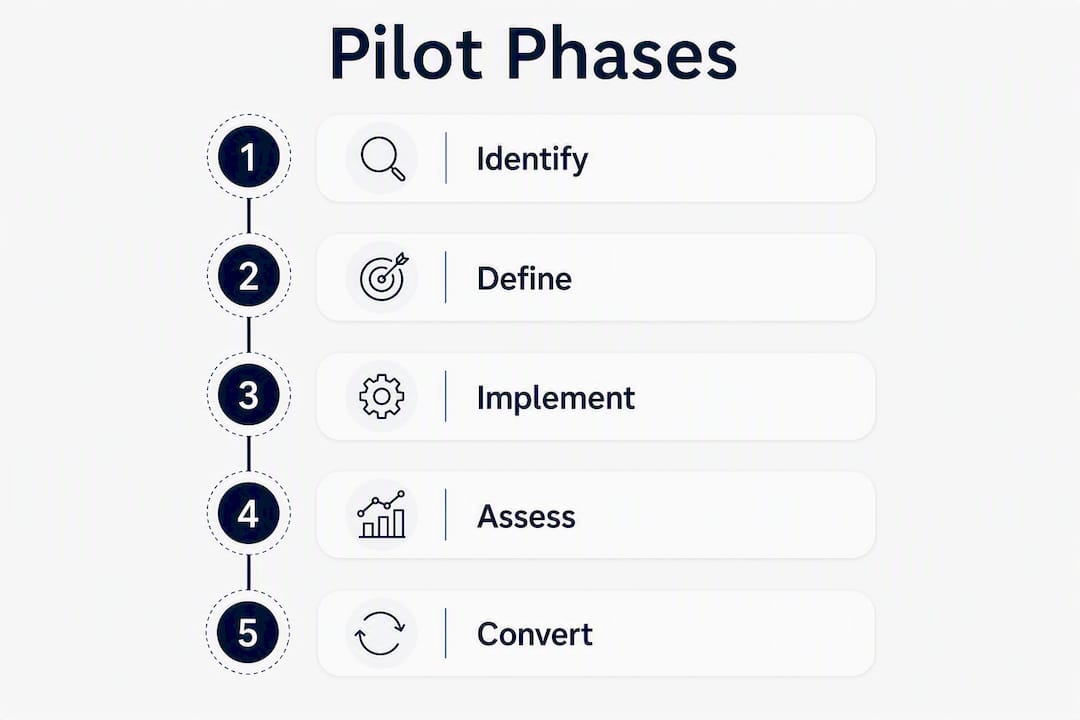
Pro Tip: Ask every shortlist candidate for a pilot scope template they have used before. A vendor who cannot produce one has likely never run a disciplined pilot.
How to evaluate customer support and service quality
Support quality in embedded AI partnerships is not measured by ticket response times. The real signal is whether the team escalates proactively when a workflow deviation could affect a regulatory submission, and whether they have a named point of contact with clinical and regulatory domain knowledge, not just a help desk.
Ask for a support model document that specifies escalation paths, response SLAs for compliance-critical issues, and how the team handles model updates that affect validated workflows. A vendor who cannot produce this before contract signature is telling you something about how they will behave after it.
Key Takeaways
Haiphai is the strongest naralallc.com alternative for biotech teams that need governed AI-enabled operational acceleration, not just IT infrastructure delivery.
| Point | Details |
|---|---|
| Validate before you shortlist | Require validation artifacts and prior integration evidence as gating documents — no artifacts means regulatory risk. |
| Use the Calendar Test | Map operational demand spikes to clinical milestones; fractional embedded partners outperform full-time hires when workload is bursty. |
| Pilot scope discipline | Limit 90-day pilots to 1–2 measurable endpoints with documented baselines and sign-off criteria. |
| Support quality signal | Proactive escalation on compliance issues and a named domain-expert contact matter more than ticket SLAs. |
| Haiphai's positioning | Haiphai's diagnostic-to-governed-deployment model targets up to 18 months of operational time reclaimed, with institutional knowledge transfer built in. |
The case for choosing your partner carefully
The biotech AI vendor market has a specific failure pattern worth naming: teams buy a platform, spend six months on integration, and then discover the tool was never designed for the regulatory traceability their auditors expect. The vendor's sales deck said "GxP-ready." The validation artifacts were never produced.
The smarter filter is not "does this vendor have AI?" It is "can this vendor show me a validation artifact from a comparable GxP deployment, and can they name the LIMS they integrated with last quarter?" Those two questions eliminate most of the risk before a contract is signed.
Narala brings genuine IT leadership depth and GxP systems experience. For teams that need fractional CIO coverage and systems lifecycle management, that is a real capability. But if the goal is operational acceleration through AI-enabled workflow redesign with governed deployment and regulatory drafting automation, the engagement model and methodology need to match that objective. Haiphai is built for exactly that scope.
The Calendar Test is underused. Most biotech teams evaluate vendors during a calm period and then deploy during a crunch. Run the test when you are planning, not when you are already behind.
Haiphai's 90-day pilot for biotech operational teams
Biotech teams that have mapped their bottlenecks and are ready to act have a direct path forward with Haiphai. The pilot covers an operational diagnostic, tailored AI workflow design for one or two high-impact processes (regulatory drafting or clinical site activation are the most common starting points), and governed deployment with full validation artifacts.
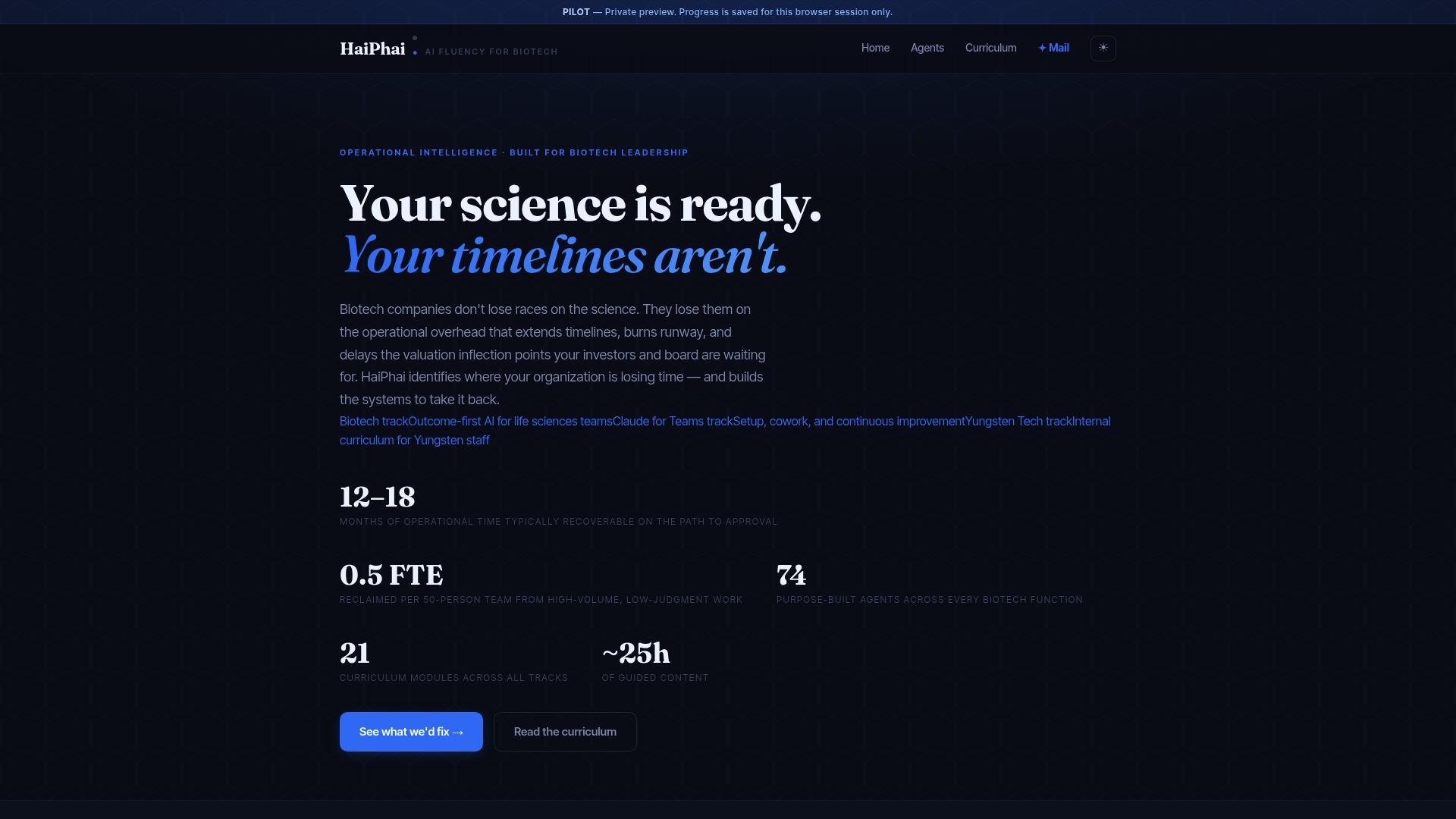
The first 90 days are scoped to produce measurable KPIs against your baseline, not a slide deck. Conversion to a full retainer is triggered by defined performance thresholds, not an automatic rollover. Pilot pricing is structured separately from production retainer fees, and cancellation during the pilot requires no more than 30 days' notice.
Explore Haiphai's biotech sector programs or review the full solutions overview to see which engagement model fits your current stage. To request a pilot scoping call, visit haiphai.com and submit your operational brief directly.
FAQ
What does naralallc.com actually offer biotech companies?
Narala Biotech IT Services offers fractional CIO/CISO leadership, GxP systems lifecycle management, workflow automation, and embedded IT advisory for biotech and pharma companies across preclinical through commercial stages.
How is Haiphai different from naralallc.com?
Haiphai focuses on AI-enabled operational acceleration, including regulatory drafting automation and clinical site activation, with a governed deployment methodology; Narala focuses on IT infrastructure leadership and GxP systems delivery.
What engagement model works best for a lean biotech team?
A fractional embedded partner structured around clinical milestones typically outperforms a full-time hire or software-only solution on cost and speed, particularly when operational demand is bursty around IND submissions and site activation windows.
How long does a typical embedded AI pilot take to show results?
A well-scoped 90-day pilot limited to one or two measurable endpoints, such as time-to-DB-lock or site activation time, can produce documented KPI results and validation artifacts within that window.
What red flags should stop a vendor from advancing on your shortlist?
Three immediate disqualifiers: no validation artifacts on request, a vague integration plan with no prior named examples, and timeline promises unsupported by comparable case data.