
Choosing a clinical operations consultancy that truly accelerates biotech program timelines is tougher than advertised. Too many consultancies withhold transparent pricing, limit access to pilots, or center only on generic tech tools rather than measurable workflow fixes. This comparison highlights pricing visibility, process focus, and clinical expertise so you can match the right firm to your program without wasted months.
Table of contents
- HaiPhai
- Flynn Life Sciences Group
- Boston Biotech Clinical Research (BBCR)
- Comparison of alternatives
Haiphai
At a glance
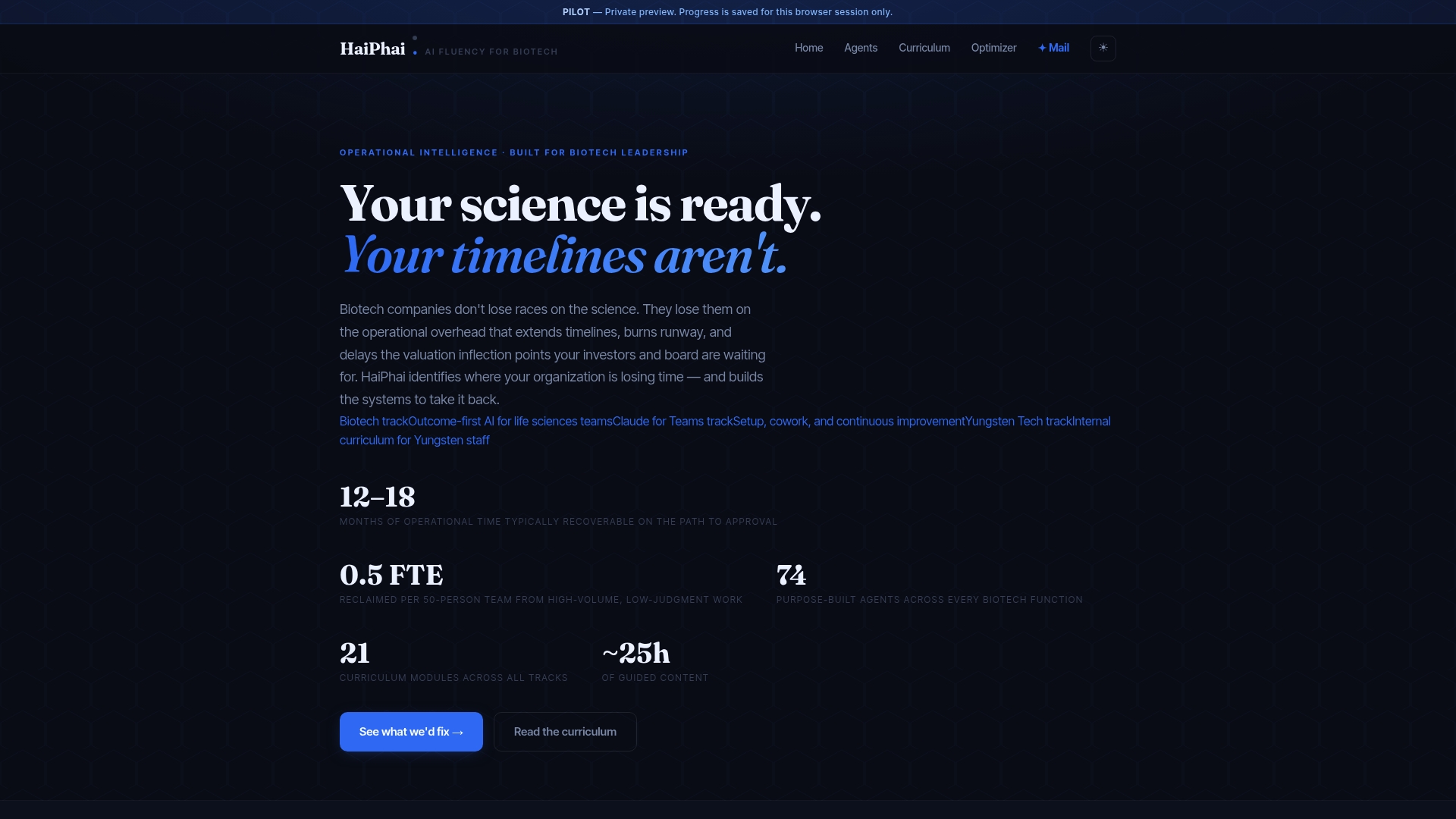
The vendor advertises that clients can reclaim up to 18 months of operational time on their path to approval. HaiPhai pairs AI tools with operational consulting to hunt down process bottlenecks in biotech workflows. The offering targets delays in regulatory drafting and clinical site activation, with a focus on shortening timelines and cutting cost from development programs.
Core features
HaiPhai combines AI agents, training, and consulting aimed at life sciences operations.
- AI-powered agents for research, preclinical, clinical, regulatory, safety, manufacturing, and commercial functions.
- Curriculum modules that teach AI fluency for biotech teams and leadership.
- Operational consulting that starts from strategic goals and backtracks to identify bottlenecks.
- Multi-agent workflow orchestration and automation tools called Orchestrator and pre-built templates for common biotech scenarios.
Key differentiator
HaiPhai centers its design on measurable outcomes rather than feature checklists. The vendor advertises a goal-oriented method that begins with your strategic milestones and works backward to rewire processes. That method ties AI agent output to specific timeline reductions and deliverables in clinical operations and regulatory filings.
Pros
-
Targets the right problems for biotech teams. The product focuses on operational bottlenecks such as site activation and regulatory drafting rather than generic task automation.
-
Blends technology with process work. Customers get AI agents plus consulting that maps fixes back to strategic goals and handoffs.
-
Built-in training reduces ramp time. Curriculum modules help staff gain AI fluency inside a biotech context so teams can run agents safely and productively.
-
Provides ready-to-use workflows. Pre-built templates and orchestration lower the effort to pilot use cases like contract review or submission packaging.
-
Designed for cross-functional use. Regulatory affairs, clinical operations, and commercial planning are explicit targets of the agent library.
Cons
- The vendor currently runs a private pilot, so access and public product detail are limited.
Who it's for
HaiPhai fits biotech R&D organizations and senior leadership that want to compress development timelines. Clinical operations and regulatory affairs teams that manage submissions and site activation will see the most immediate value. Small biotech shops seeking tactical fixes and mid-size teams aiming to shift process ownership can both benefit.
Unique value proposition
Pairs AI agents with operational consulting that backtracks from your strategic goals to practical fixes. That combination turns model output into implementable changes in workflows and documentation practices. The economic effect is faster regulatory submissions and fewer wasted months on routine administrative tasks.
Real world use case
A midsize biotech used HaiPhai agents to automate contract review and clean up submission documents. The team reduced approval timelines by several months, which the vendor reports saved runway and accelerated the company�s go-to-market timing. The case shows how agent work plus process redesign cuts time and legal overhead.
Pricing
Not applicable — informational only. The product data lists the offering as private pilot and provides no public commercial tiers. Interested teams should contact HaiPhai for pilot access and commercial terms.
Website: https://haiphai.com
Flynn life sciences group

At a glance
A proactive community of vetted life sciences professionals stands ready to deliver on demand. Flynn uses that community to reduce onboarding time and accelerate trial startup for emerging biotech teams. The offering mixes staffing and targeted consulting to cover clinical design, vendor oversight, and interim leadership.
Core features
- Vast network of life sciences professionals: Access to consultants with clinical operations, regulatory writing, and project leadership experience.
- Proactive staffing approach: Flynn sources and curates candidates before a client posts a role to cut hiring latency.
- Flexible support models: Options include fractional consultants, project based support, and interim leadership placements.
- Deep clinical development expertise: Services span protocol design, vendor management, and clinical operations oversight.
- End to end support: From trial design through vendor selection and oversight, consultants cover execution tasks and handoffs.
Key differentiator
Flynn’s main distinction is its community driven staffing model that matches vetted consultants to openings quickly. That model aims to reduce time lost to sourcing and screening. Compared with Haiphai, Flynn focuses narrowly on supplying talent and interim leadership rather than redesigning internal operational processes or embedding AI into workflows.
Pros
- Fast response time due to a curated consultant community. Teams report shorter candidate search windows when Flynn assigns matched consultants.
- Tailored services for specific program needs. Flynn can place a fractional clinical operations lead or assemble a cross functional trial team.
- Strong network of experienced biotech and pharmaceutical consultants. The community includes people with regulatory writing and vendor oversight experience.
- Flexible support options including fractional and project based engagements. That lets companies buy expertise without long term hires.
- Proactive sourcing reduces hiring delays. Flynn’s sourcing model can keep a candidate pipeline warm for near term projects.
Cons
- Limited detail on pricing or contractual terms in public materials. Prospective clients must request custom proposals for cost clarity.
- No explicit information on technology platforms or digital tools used. The model appears people centered rather than platform centered.
- Consultant availability may vary by specialty and timing. High demand specialties could face gaps during busy hiring cycles.
When it may not fit
Flynn may not be a good fit if you require transparent standard pricing or fixed rate packages out of the gate. Do not choose Flynn if you need a turnkey software platform or embedded digital tools for site activation. Also avoid Flynn when you need guaranteed long term bench availability for a highly specialized niche role.
Who it's for
Emerging biotech and mid stage pharmaceutical teams that need expert hands quickly will find value here. Clinical leads, small development teams, and companies preparing pivotal trials can use Flynn to fill interim roles without hiring full time. Teams that prefer people first solutions over platform automation will get the most from this service.
Real world use case
A small biotech used Flynn to assemble a clinical operations team for a pivotal trial. Flynn provided a fractional operations lead, a regulatory writer, and vendor oversight support to speed trial start. The model reduced internal hiring load while keeping program oversight with the sponsor team.
Website: https://flynnlsg.com
Boston biotech clinical research (BBCR)
At a glance
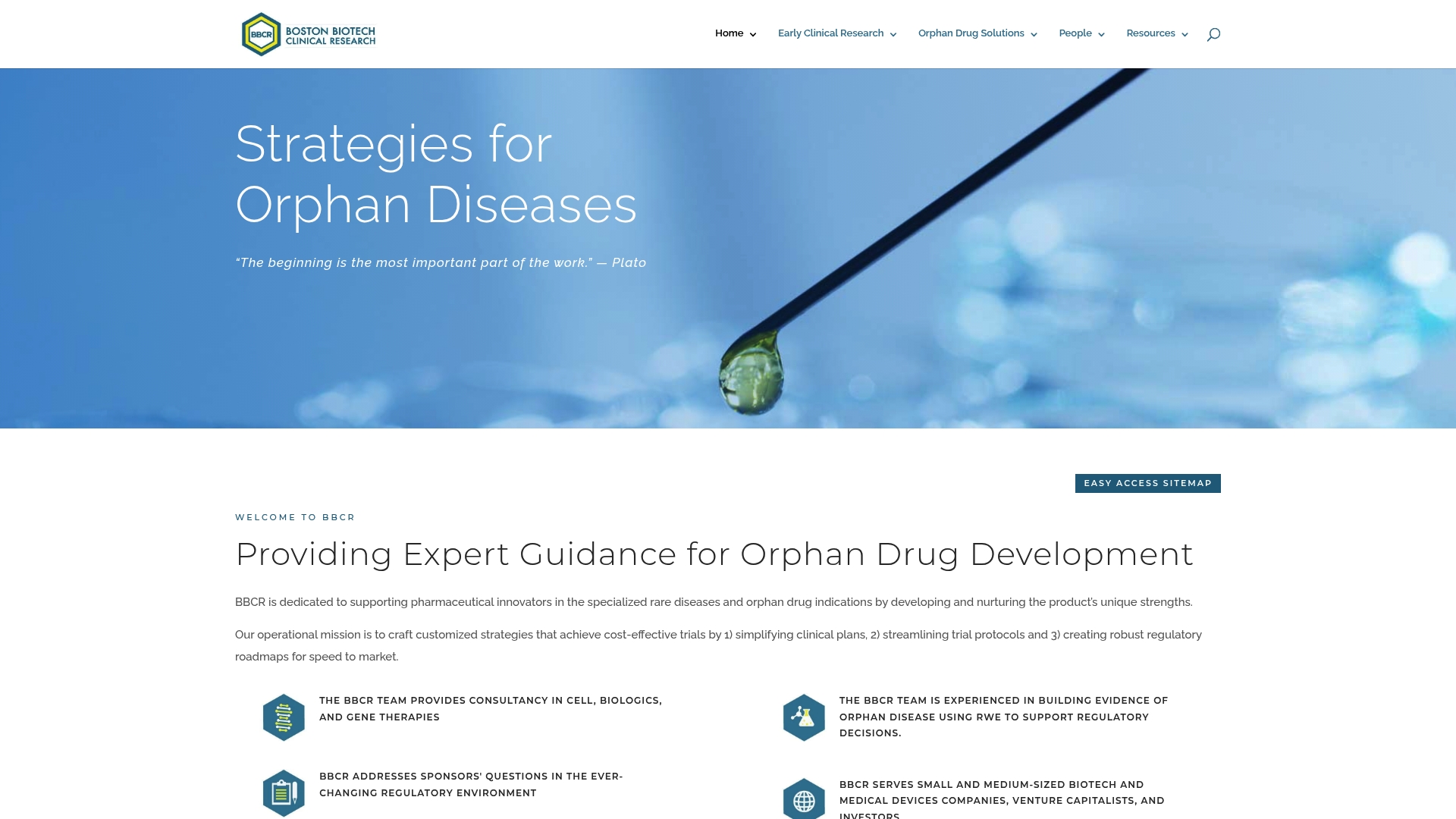
Specialized focus on orphan and rare disease trial optimization and strong experience with cell and gene therapies. BBCR concentrates on early clinical design and regulatory pathways for small to medium biotech sponsors. Their work emphasizes practical protocol choices that lower cost and shorten timelines for niche indications.
Core features
BBCR delivers customized clinical and regulatory strategies that aim to reduce development timelines for orphan and precision medicine programs. They advise on trial planning, protocol drafting, and biomarker development for small Phase 1 and Phase 2 studies. The team uses Real World Evidence to support regulatory submissions and to inform study design. Services include pre-IND planning, study rescue, and regulatory consulting focused on rare and ultra-rare indications.
Key differentiator
BBCR’s defining strength is its narrow focus on orphan and rare disease programs coupled with hands-on regulatory experience. That focus lets teams avoid one-size-fits-all protocols and pick endpoints tailored to small patient populations. For sponsors with gene therapy or biologic candidates in rare disorders, BBCR adapts trial design to regulatory realities and limited enrollment.
Pros
-
Deep subject matter expertise in rare diseases and orphan drug development. This helps sponsors craft protocols that regulators accept more readily.
-
Experience with biologics, cell, and gene therapies. Teams working on advanced modalities will find relevant regulatory familiarity.
-
Use of Real World Evidence to bolster regulatory arguments. RWE can shorten development steps for small populations when used correctly.
-
Broad service coverage from pre-IND planning through Phase 2. You can keep strategy and protocol work under one consultancy relationship.
-
Reputation for tailored advice in complex regulatory environments. That reduces time lost to standard approaches that do not fit rare indications.
Cons
-
Limited public pricing or contract transparency. You will likely need to request a custom proposal to see engagement costs.
-
Not positioned as a full CRO for large multi-national trials. Sponsors planning global, high-volume studies will need additional operational partners.
-
Primary focus on small to medium sponsors. Very large pharmaceutical companies may find the scale and staffing model less aligned with their needs.
When it may not fit
If you plan a broad Phase 3 program with hundreds of sites you will need a true full-service CRO. BBCR concentrates on early-stage design and regulatory strategy for niche diseases. If your indication targets common conditions with large patient pools, BBCR’s rare disease orientation may offer limited operational value.
Who it's for
Small to medium biotech and medical device companies developing therapies for rare disorders will get the most from BBCR. Early-stage sponsors seeking pre-IND guidance, orphan designation advice, or biomarker strategy will find focused expertise. The consultancy suits teams that need regulatory-savvy trial design rather than full trial execution.
Real world use case
A biotech working on a gene therapy for a rare inherited disorder engaged BBCR to craft a streamlined Phase 1 and 2 plan. BBCR helped define biomarkers, shaped inclusion criteria, and mapped regulatory touchpoints. The result was a regulatory package aligned to small cohort realities and a clearer path to FDA interactions.
Pricing
Pricing is not listed publicly. The product data labels pricing as informational only. Expect project-based proposals and custom scopes rather than fixed published tiers. Contact BBCR for a tailored engagement estimate.
Website: https://bbcrconsulting.com
Comparison of alternatives
Finding the right fit within clinical operations consultancy involves assessing each provider's capabilities to address workflow efficiency challenges and regulatory complexities. Here we examine HaiPhai, Flynn Life Sciences Group, and Boston Biotech Clinical Research.
Analytical insights across providers
Capabilities in operational redesign: HaiPhai shines through with its AI-powered agents and consulting, aiming to streamline clinical workflows. Flynn offers experienced staffing solutions for demanding hiring schedules, which, despite lacking automation, provide human reliability. BBCR specializes in addressing rare disease trial challenges but limits its scope to niche fields.
Support structure differences: Flynn's flexible consultant placements allow for tailored project setups, benefiting teams with variable capacity needs. In contrast, HaiPhai emphasizes long-term gains through process optimization and education. BBCR emphasizes collaborative regulatory planning, suitable for rare-disease initiatives.
Unique audience alignment: HaiPhai targets organizations keen on adopting integrated technological advancements for substantial improvements. Flynn benefits teams needing immediate staffing. BBCR suits those dedicated to rare disease endeavors and leaving broader applications less covered.
Best fit
- For teams emphasizing operational efficiency: HaiPhai merges AI-powered workflow enhancements with operational consultancy.
- For companies requiring immediate expert staffing: Flynn excels through its proactive talent placement mechanisms.
- For organizations focused on rare diseases: BBCR provides expertise in rare disease trial planning and regulatory navigation.
Our pick
HaiPhai’s AI-based methodologies, reinforced by its strategic consultancy, perfectly align with institutions dedicated to accelerating their regulatory processes. However, teams focused primarily on staffing solutions or rare disease expertise might favor Flynn or BBCR, respectively.
Find the right clinical operations partner by comparing the features, strengths, and limitations of leading consultancy options to optimize your choice.
| Product | Core Feature | Key Differentiator | Best For | Notable Limitation |
|---|---|---|---|---|
| HaiPhai | AI agents and operational consulting | Goal-oriented approach to streamline bottlenecks | Biotech R&D organizations | Access is currently limited to private pilots |
| Flynn Life Sciences Group | Staffing and consultant placement | Proactive community-driven staffing model | Emerging biotech needing interim expertise | Lack of technology platform integration |
| Boston Biotech Clinical Research | Orphan and rare disease trial optimization | Narrow focus on rare diseases and cell/gene therapies | Small to medium biotech developing niche therapies | Focuses on smaller-scale trials, limiting scalability |
Cut development delays with haiphai’s strategic AI approach
The search for effective cliniphi.com alternatives often reveals shared frustrations around extended timelines and costly operational bottlenecks in biotech workflows. Haiphai addresses these challenges by focusing not just on automation but on understanding your strategic goals and pinpointing delays in processes like regulatory drafting and site activation. This approach helps life sciences teams reclaim up to 18 months in development time and significantly reduce financial waste.
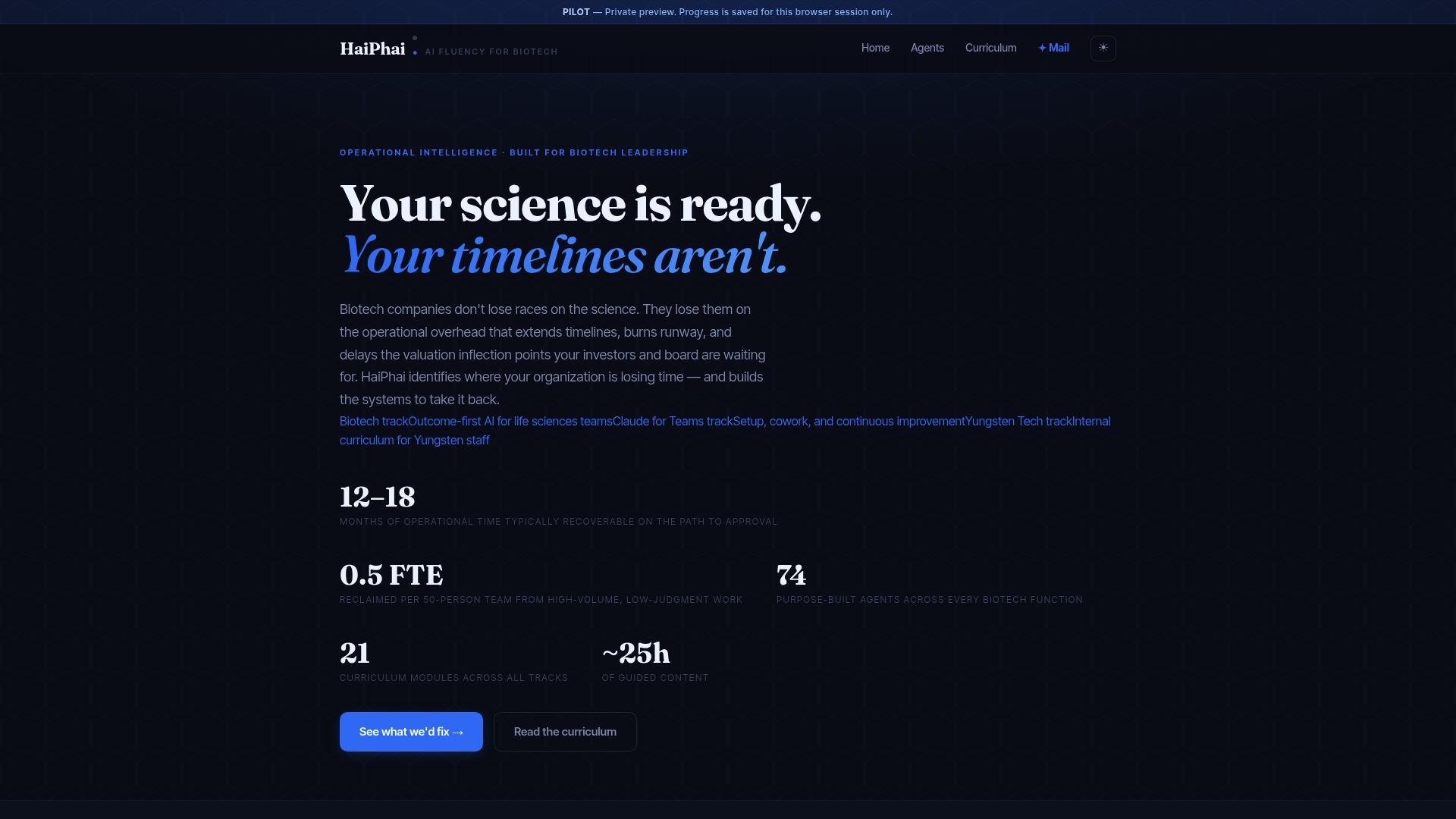
If your team needs more than a typical software package, explore how Haiphai combines AI agents with operational consulting to deliver targeted fixes that make a measurable difference. Visit Haiphai to learn how you can accelerate clinical approvals and optimize your workflows. Book a personalized demo and identify key bottlenecks slowing your path to market.
FAQ
How does Haiphai help biotech teams address operational bottlenecks?
Haiphai pairs AI-powered agents with operational consulting to identify and resolve process bottlenecks in biotech workflows. The platform focuses on critical issues like regulatory drafting and clinical site activation, aiming to reclaim up to 18 months of operational time. If you're looking to streamline your clinical operations and enhance efficiency, consider starting a pilot with Haiphai.
What is the difference between flynn life sciences group and Haiphai?
Flynn Life Sciences Group excels in providing access to a vast network of vetted life sciences professionals quickly, allowing for immediate staffing solutions. In comparison, Haiphai specializes in integrating AI tools for process improvement, particularly in regulatory and clinical operations. For organizations looking for procedural redesign and AI implementation, Haiphai may be the better choice.
Which platform is preferable for small biotech firms: Haiphai or boston biotech clinical research (BBCR)?
Boston Biotech Clinical Research (BBCR) focuses on early clinical design and regulatory pathways for orphan and rare disease trials, which can be a strong advantage for specialized projects. However, Haiphai is tailored to broader biotech operational efficiencies, making it a more suitable option for firms looking to optimize general clinical processes. If your goal is to improve overall timelines and lower costs, Haiphai could be the right fit.
Can haiphai's services accommodate mid-size biotech companies?
Haiphai is designed for biotech R&D organizations and senior leadership aiming to compress development timelines, making it well-suited for mid-size biotech companies. The focus on specific operational improvements enables these teams to manage submissions and site activations effectively, ensuring they can benefit from tailored solutions to fit their scale.
How does Haiphai provide training for biotech teams?
Haiphai includes curriculum modules that teach AI fluency within a biotech context, ensuring teams can effectively run AI agents. This built-in training is aimed at reducing ramp-up time for staff, allowing for quicker integration of new technology into processes. If skill development alongside process improvement is vital for your team, Haiphai offers a robust solution for that need.