
Life sciences grant funding breaks down into seven core categories: federal research project grants (R-series), training and career development awards (F/K/T-series), center and infrastructure grants (P-series, S10), SBIR/STTR small-business awards, contracts and cooperative agreements (U-series), challenges and prizes, and foundation or corporate funding. Each category serves a distinct purpose and comes with its own activity codes, eligibility rules, and review process, and picking the wrong one wastes months. The main sources to check first: NIH, NSF, Grants, SBIR/STTR portals, and NIH RePORTER.
Here's the taxonomy at a glance:
- Research project grants fund an investigator's independent research agenda (think R01).
- Training and career development awards support fellows and early-career scientists transitioning to independence.
- Center and infrastructure grants fund shared equipment, cores, or multi-investigator programs.
- SBIR/STTR awards fund small businesses commercializing research with federal money.
- Contracts and cooperative agreements fund agency-directed work with tighter oversight.
- Challenges and prizes offer non-dilutive cash for solving a defined problem.
- Foundation and corporate funding fills gaps federal peer review often won't touch.
Key Takeaways
Matching a life sciences project to the right funding category, from R-series research grants to SBIR/STTR to challenges and prizes, depends more on mission fit and career stage than on chasing the largest available award.
| Point | Details |
|---|---|
| Seven core categories exist | Research project, training/career, center/infrastructure, SBIR/STTR, contracts/cooperative agreements, challenges, and foundation funding. |
| Instrument type changes workload | Grants offer flexibility; cooperative agreements involve substantial agency participation and more oversight. |
| Activity codes signal career stage | R21 fits exploratory ideas, R01 fits established programs, K99/R00 fits the postdoc-to-faculty transition. |
| Mission fit beats broad topic match | Misaligned aims to an institute's mission are a leading cause of rejection, regardless of proposal quality. |
| Administrative readiness affects timelines | Haiphai's operational partnership model has helped clients reclaim significant execution time post-award. |
Table of Contents
- Grant vs. Contract vs. Cooperative Agreement: What's the Difference?
- What Are the Main Funding Categories and Typical Budgets?
- How Do NIH Activity Codes Map to Career Stage and Project Type?
- Which Organizations Actually Fund Life Sciences Research?
- Where Should You Search for Open Funding Opportunities?
- What Should You Expect on Eligibility, Budgets, and Deadlines?
- How Do You Pick the Right Category and Avoid Mismatches?
- Why Administrative Readiness Changes Your Funding Outcomes
- A Grants Administrator's Quick Take
- Operational Partnerships That Shorten the Path to Funding
- Sources
- FAQ
Grant vs. Contract vs. Cooperative Agreement: What's the Difference?
A grant is financial assistance with minimal agency involvement in your day-to-day work. A contract is procurement. The government wants a specific deliverable and pays you to produce it, much like hiring a vendor. A cooperative agreement sits in between: it's assistance, but NIH staff participate substantially in your project, sometimes co-designing protocols or sitting on your steering committee. NIH's own policy statement on award instruments spells out exactly how much agency involvement separates a cooperative agreement (often coded as a U-series award) from a standard grant.
That distinction changes your workload. A taxonomy from CASRAI sorts awards along four axes: legal instrument, purpose, funding restriction, and selection method, which matters because two awards that look similar on paper can carry very different reporting burdens.
- Grants typically mean lighter reporting, more scientific freedom, and progress reports on your own timeline.
- Contracts usually mean fixed deliverables, government-approved milestones, and invoicing tied to specific outputs.
- Cooperative agreements often mean shared decision-making, additional check-ins, and less flexibility to pivot your approach midstream.
Pro Tip: Read the funding opportunity announcement's instrument language before you write a single aim. If it says "cooperative agreement," call the program officer early and ask what "substantial involvement" actually looks like for that award. It varies more than people expect.
What Are the Main Funding Categories and Typical Budgets?
Matching a project to a category starts with duration and scope, not just topic fit. NIH's funding categories page groups awards into research training and career development, research and development, construction and modernization, small business, supplemental funding, loan repayment, other transactions, and challenges and prizes. The table below gives typical, illustrative ranges. Actual budgets and durations vary by institute, funding opportunity announcement, and fiscal year.
Research project grants like R01 support an investigator's salary, equipment, and personnel costs across a full research program, while R21 exists specifically for early, higher-risk ideas that don't yet have preliminary data to justify a full R01.
An R21 exists precisely because not every good idea has pilot data behind it yet, a concept well-explored in anti-aging peptide research demonstrating early-stage innovations in longevity science. It funds the two years of exploratory work that earns you the right to apply for an R01.
How Do NIH Activity Codes Map to Career Stage and Project Type?
NIH groups its activity codes into families, and each family answers a different question about your project. R-series codes fund research itself. K-series codes fund a person's transition to independence. F and T-series codes fund training, either for an individual fellow or through an institutional program. P-series codes fund centers and shared infrastructure. U-series codes fund cooperative agreements where NIH staff stay closely involved.
- R01: the standard independent research project grant, typically for an investigator with preliminary data and a defined hypothesis.
- R21: exploratory or developmental research, for high-risk ideas without extensive pilot data.
- R03: small grants for limited-scope projects, pilot studies, or secondary data analysis.
- K99/R00: the career transition award, funding a postdoc's final mentored years and first two years as an independent faculty member.
- F31: predoctoral fellowships for graduate students conducting dissertation research.
- T32: institutional training grants that fund multiple trainees through a structured program, rather than one individual.
- P30/P01: center grants (P30) fund shared resources and cores; program project grants (P01) fund multiple related research projects under one umbrella.
- U01: a cooperative agreement for a defined research project with substantial NIH staff involvement.
A postdoc finishing a fellowship looks at K99/R00. A junior faculty member with a novel but unproven idea looks at R21. A department building a shared imaging core looks at P30. Matching the code to the career stage, not just the science, saves entire review cycles.
Which Organizations Actually Fund Life Sciences Research?
Federal agencies, private foundations, corporate R&D arms, and venture-style philanthropy each fund life sciences work for different reasons, and knowing which one to target keeps you from writing a proposal that answers the wrong question. NIH funds basic and translational biomedical research across its institutes and centers. NSF funds fundamental science, including its Biological Technologies programs under the BIO directorate, often with less clinical emphasis than NIH. The Department of Energy funds biological and environmental research tied to energy, environment, and large-scale systems biology, an area NIH rarely touches.
- NIH funds basic, translational, and clinical biomedical research, plus training and career development.
- NSF funds fundamental biological science, technology development, and interdisciplinary STEM training, with programs like SBIR seed funding for biological technologies.
- DOE funds biological and environmental research connected to energy systems, genomics, and environmental science.
- Private foundations often fund high-risk, disease-specific, or interdisciplinary work that federal peer review tends to pass over, including prize programs like Pershing Square Philanthropies' MIND Prize.
- Corporate R&D and venture arms fund commercialization-stage work tied to a specific therapeutic or platform interest.
Clinical trial support and translational emphasis shift a lot depending on the funder, so read the program's stated priorities before assuming your project fits.
Where Should You Search for Open Funding Opportunities?
Start with Grants.gov for the master list of federal funding opportunity announcements across every agency, then narrow from there. The NIH Guide for Grants and Contracts posts every NIH-specific announcement the day it's released. NIH RePORTER lets you search funded projects by keyword, institute, or investigator, which tells you what already got funded and by whom. NSF's Research.gov handles NSF proposal submission and tracking. Each SBIR-participating agency runs its own topics portal for small-business awards, and most large foundations run separate application portals entirely.
A short checklist to run through today:
- Search Grants.gov and the NIH Guide for open announcements matching your project's scope.
- Search NIH RePORTER for previously funded projects similar to yours, and note which institute funded them.
- Identify the specific NIH institute, center, or office whose mission actually matches your aims.
- Email the program officer listed on the announcement before you submit anything.
- Confirm your institution's internal deadline, which usually falls a week or more before the agency deadline.
What Should You Expect on Eligibility, Budgets, and Deadlines?
Eligibility hinges on three things: investigator status, institution type, and, for SBIR/STTR, small-business ownership rules. Most R-series grants require the applicant institution to have the administrative capacity to manage federal funds, while SBIR/STTR requires the applicant company to be a for-profit U.S. small business, and ownership and employee-count thresholds can disqualify startups that took on heavy outside venture ownership before applying.
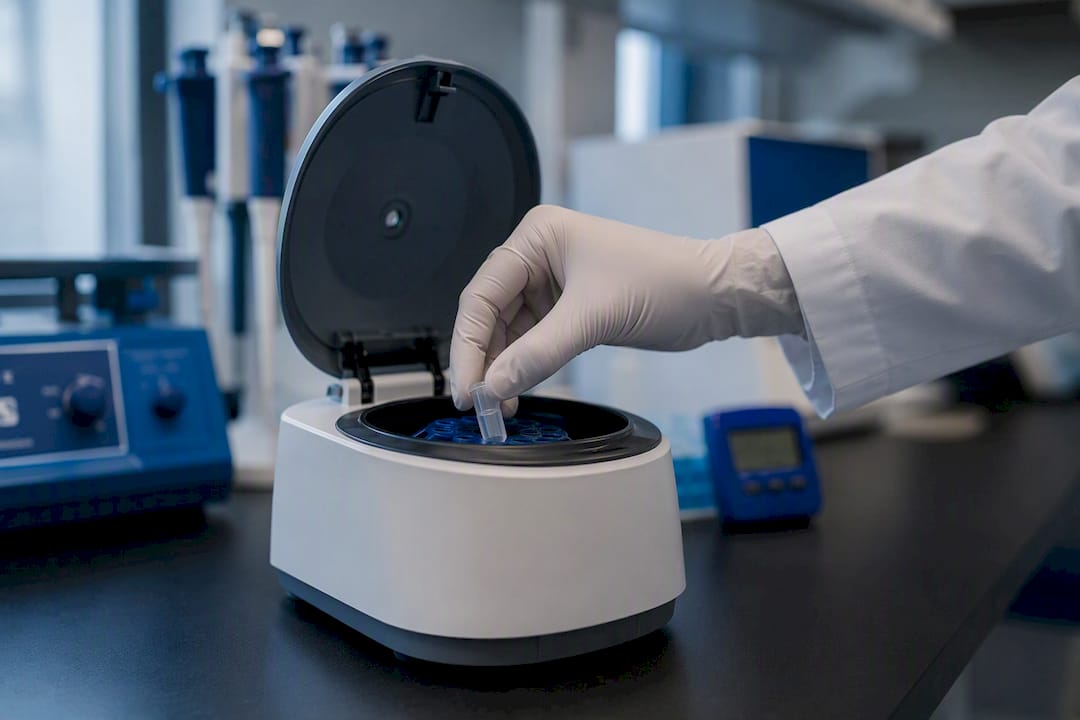
Timelines vary sharply by mechanism. A standard NIH R01 typically runs several months from submission to award, factoring in study section review and council approval. SBIR Phase I awards often move faster, sometimes several months. Prizes and challenges can resolve in weeks once the submission window closes.
Before you submit anything, confirm these registrations and approvals are current:
- eRA Commons account, active and linked to your institution
- SAM.gov registration, renewed annually
- IRB approval for human subjects research, or IACUC approval for animal studies
- Conflict-of-interest disclosures filed with your institution's research office
Missing even one of these can delay an award by months after the science has already been approved.
How Do You Pick the Right Category and Avoid Mismatches?
Run through this sequence before drafting anything:
- Does your project's aim genuinely match a specific NIH institute or center's mission, not just the topic broadly?
- What's your investigator status, graduate student, postdoc, early-career faculty, or established PI, and which activity codes actually target that stage?
- How mature is the science? Preliminary data supports an R01; an unproven idea fits R21 or R03 better.
- If you're a small business, do you meet SBIR/STTR ownership and size thresholds?
Pro Tip: Use NIH RePORTER to pull the last three years of funded projects from your target institute. If none resemble your aims, that's a signal to find a better-matched institute before you spend six months writing.
The most common mistake is chasing the biggest available pot of money instead of the best-matched one. A well-written R01 sent to the wrong institute loses to a mediocre proposal sent to the right one. Misaligned aims remain one of the most common, and most avoidable, reasons proposals get rejected before they're even fully reviewed.
Why Administrative Readiness Changes Your Funding Outcomes
A proposal that clears review still has to survive award setup, subrecipient agreements, and milestone tracking, and weak administrative infrastructure is where funded projects lose the most time. Operational drag doesn't show up in the review score. It shows up six months later when your team is still negotiating a subaward instead of running experiments.
Clients working with Haiphai have reclaimed significant operational time on their path to approval, time that compounds directly into company valuation and follow-on funding leverage.
One habit worth building into your research office now: centralize sponsor correspondence, milestone deadlines, and compliance renewals in a single tracked system, rather than scattered across individual PI inboxes. It's the difference between catching a lapsed IRB approval in week one versus discovering it during an audit.
A Grants Administrator's Quick Take
After years of watching proposals stall post-award rather than pre-award, the pattern is consistent: internal budget reviews before submission catch cost errors that reviewers won't, early PI-to-program-officer conversations catch mission mismatches before they become rejections, and realistic budgets beat ambitious ones almost every time. The team composition behind a proposal often matters as much as the science itself.

Operational Partnerships That Shorten the Path to Funding
Winning the grant is only half the problem. The other half is executing fast enough that the award still matters by the time you clear regulatory and clinical milestones. Haiphai works as an embedded operational partner for biotech teams, mapping where regulatory drafting, clinical site activation, and workflow bottlenecks are quietly costing months. Then rebuilding those processes with AI tailored to your specific institutional knowledge rather than a generic software layer.
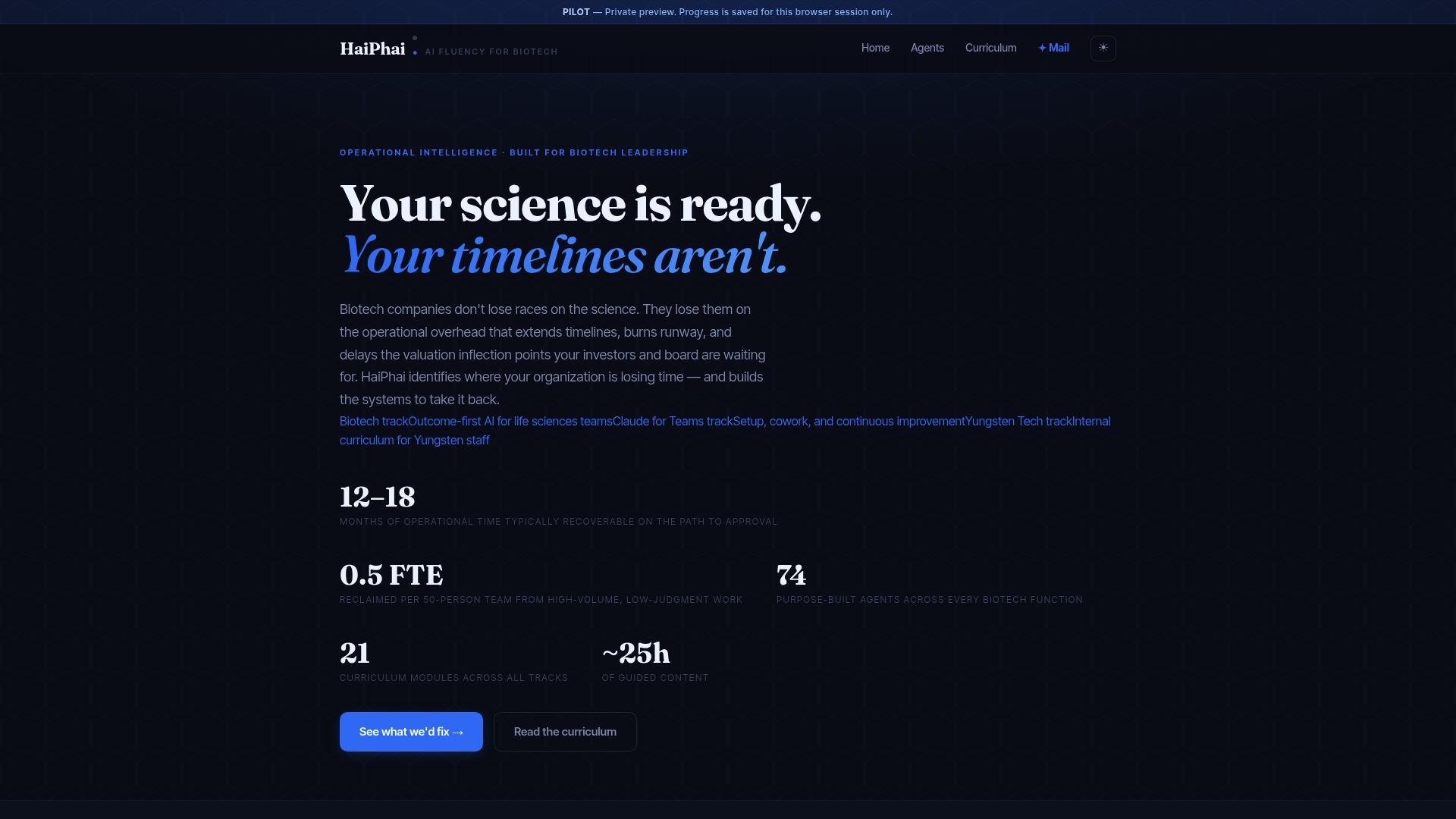
That diagnostic approach is why clients have reclaimed significant operational time on their path to approval, time that translates directly into stronger valuation conversations with funders and investors. If your research office is juggling multiple award types and feeling the administrative strain, it's worth a conversation before your next submission cycle, not after. Explore how Haiphai works with teams across life sciences sectors to see where the fit makes sense. Keep in mind that outsourcing any part of proposal work still requires confirming your specific FOA's rules and your institution's own compliance policies first.
Sources
FAQ
What are the different types of grant funding?
The main types are research project grants, training and career development awards, center and infrastructure grants, small-business SBIR/STTR awards, contracts, cooperative agreements, and challenges or prizes, each with distinct eligibility and review criteria.
What are the different categories of funding provided by the NIH?
NIH organizes its programs into research training and career development, research and development, construction and modernization, small business, supplemental funding, loan repayment, other transactions, and challenges and prizes.
What is a type 4 grant?
NIH activity type is not a standard public category label; "type" more commonly refers to application types (new, renewal, resubmission) within an activity code like R01, rather than a distinct funding category.
What are the three types of funding?
At the broadest level, funding splits into federal (agencies like NIH, NSF, and DOE), private (foundations, corporate R&D, and venture capital), and non-dilutive alternatives like challenges and prizes, which award cash without equity or repayment obligations.
How long does it take to get an NIH grant funded?
A standard R01 typically takes several months from submission to award, while SBIR Phase I awards often move faster, and prize competitions can resolve in a matter of weeks.