
Life sciences project management is the systematic oversight of multidisciplinary projects in biotech and pharmaceutical sectors to drive innovation while meeting strict regulatory, timeline, and budgetary demands. Known formally as biopharma project management or pharmaceutical project management, this discipline covers everything from early-stage research coordination to commercial product launches. The life sciences project management market is growing rapidly, driven by rising chronic disease rates and demand for personalized medicine. Skilled professionals who combine scientific literacy with project leadership are in short supply and high demand.
What is life sciences project management?
Life sciences project management is the structured coordination of people, processes, and resources to deliver biotech and pharma projects on time, within budget, and in compliance with regulatory requirements. It applies formal project management principles to environments where a single misstep can delay a drug by years or cost a company hundreds of millions of dollars. Life sciences project managers oversee complex initiatives including clinical trials, regulatory submissions, and product launches, keeping these projects on scope, on schedule, and on budget throughout the product lifecycle.
The discipline sits at the intersection of science and operations. A project manager in this field must understand FDA submission requirements, GMP manufacturing standards, and ICH guidelines well enough to anticipate where a project can break down. That scientific fluency separates life sciences project management from general project management and explains why the role commands specialized training and certification.

What roles and project types does this field cover?
The scope of a life sciences project manager's responsibilities is broader than most people expect. Cross-functional coordination across scientific, regulatory, legal, and commercial teams is a daily requirement, not an occasional task.
Common project types include:
- Clinical trial management: Designing and executing Phase I through Phase III trials, managing CRO relationships, and tracking patient enrollment timelines
- Regulatory submissions: Coordinating IND, NDA, BLA, or CE Mark filings, including document compilation, review cycles, and agency responses
- Manufacturing scale-up: Overseeing tech transfer from lab to GMP facility, equipment validation, and process qualification
- Product launch management: Aligning commercial, medical affairs, and supply chain teams ahead of market entry
- Post-market surveillance: Managing pharmacovigilance systems and adverse event reporting programs
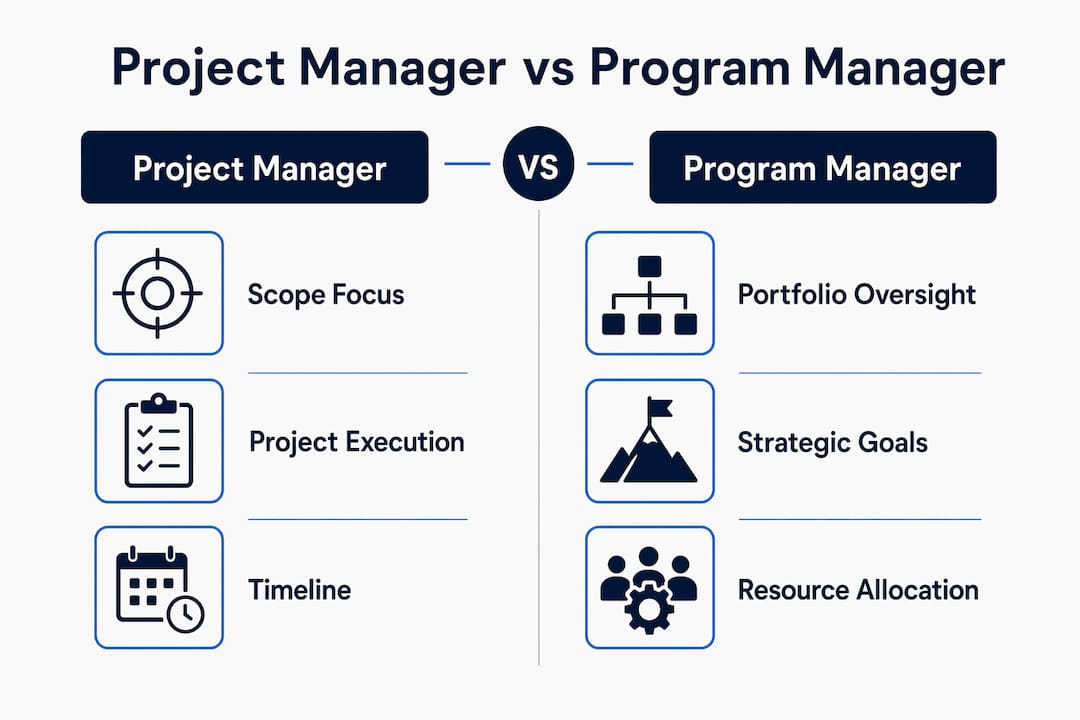
One distinction worth understanding is the difference between a project manager and a program manager. Program managers oversee broad portfolios or entire drug development programs, while project managers focus on executing single projects within those programs. Program management demands strategic resource allocation and governance across related projects. Project management demands precise execution within defined scope and timeline. Both roles exist in most mid-to-large biotech and pharma organizations, and career progression often moves from project to program management over time.
Why is project management critical in life sciences?
Effective project management ensures that pharmaceutical and medical device projects are delivered on time, within budget, and in compliance with industry regulations. That sentence sounds straightforward. The reality is that a single delayed clinical trial can push a drug's approval back by 12 to 18 months, eroding patent protection and investor confidence simultaneously.
The importance of project management in life sciences comes down to four compounding pressures:
- Regulatory complexity: FDA, EMA, and other agencies require meticulous documentation at every stage. Regulatory alignment throughout the project lifecycle, including facility construction, equipment validation, and system implementation, is a core project management responsibility.
- Financial stakes: Drug development costs routinely exceed $1 billion. Project managers control scope creep and budget variance before they become existential problems.
- Risk management: Identifying and mitigating risks early, whether a supplier failure or a protocol amendment, prevents cascading delays across the entire development program.
- Stakeholder alignment: Poor project management in biopharma leads to missed deadlines, lost materials, increased costs, and damaged client trust. Strong project management clears the path forward and builds long-term partnerships.
The contrast between good and poor project management is stark in outsourced biopharma development. When a biotech company contracts a CDMO for manufacturing, the project manager is the single point of accountability connecting science, quality, and timelines. Without that coordination, even technically excellent work fails to deliver on schedule.
Pro Tip: Build a risk register at project kickoff and review it weekly. In regulated environments, risks that go unlogged tend to become audit findings.
What skills and best practices do life sciences project managers need?
Technical knowledge in biology, chemistry, and clinical trials is necessary, but soft skills like communication, leadership, and stakeholder management ultimately determine project success. This is the insight most job descriptions understate. You can know every step of an IND submission process and still fail if you cannot align a VP of Regulatory Affairs with a CMO who have competing priorities.
Technical competencies
Strong life sciences project managers bring working knowledge of:
- GxP regulations (GMP, GCP, GLP) and their documentation requirements
- Clinical trial design, protocol development, and CRO management
- Regulatory submission processes across major markets (FDA, EMA, PMDA)
- Data analysis tools and electronic trial master file (eTMF) systems
- Budget modeling and resource forecasting for multi-year development programs
Soft skills that drive results
Navigating internal politics and aligning cross-functional teams are critical competencies that no certification fully teaches. The best project managers in biotech are skilled at translating scientific complexity into business language for executives, and translating business constraints back into scientific priorities for research teams. That bidirectional fluency is rare and valuable.
Certifications and continuous learning
Certifications like PMP, CAPM, AgilePM, and PRINCE2 are recommended for life sciences project managers to build credibility and improve career prospects. The PMP from the Project Management Institute remains the gold standard across industries. For life sciences specifically, the Drug Information Association (DIA) offers project management training tailored to regulatory environments. Pairing a PMP with DIA coursework gives you a credential set that signals both general competence and sector-specific knowledge.
Pro Tip: When managing outsourced partnerships, document every decision and change request in writing. Verbal agreements in CDMO relationships are the leading source of scope disputes.
How is generative AI transforming this field?
Generative AI is increasingly integrated into life sciences project management to accelerate innovation and improve collaboration across global teams. The Project Management Institute gathered insights from more than 70 project professionals and AI practitioners across 14 countries to identify four key actions for responsible AI implementation. That global scope signals how quickly this shift is happening.
The practical applications are already visible in high-performing biotech organizations:
| AI Application | Project Management Benefit |
|---|---|
| Regulatory document drafting | Reduces time spent on first-draft submissions by generating compliant templates |
| Clinical site activation | Automates feasibility assessments and startup document workflows |
| Risk identification | Scans project data to flag schedule risks before they escalate |
| Meeting summarization | Captures action items and decisions from cross-functional team meetings |
| Resource forecasting | Models capacity gaps across concurrent development programs |
Generative AI adoption is reshaping project management approaches across life sciences by enabling faster innovation cycles and better team coordination globally. The caveat is governance. AI tools used in regulated environments must be validated, and their outputs must be reviewed by qualified professionals before they enter any submission or quality system. Organizations that deploy AI in healthcare operations without a governance framework create compliance exposure that outweighs the efficiency gains.
The project managers who will lead in the next five years are those who learn to work with AI tools now, not those who wait for the technology to mature.
Key takeaways
Life sciences project management succeeds when scientific expertise, regulatory discipline, and cross-functional leadership operate together as a single system.
| Point | Details |
|---|---|
| Core definition | Life sciences project management coordinates people, processes, and resources across biotech and pharma to deliver compliant, on-time results. |
| Role distinction matters | Project managers execute single projects; program managers govern portfolios. Knowing the difference shapes career planning. |
| Soft skills decide outcomes | Communication and stakeholder alignment determine project success more than technical knowledge alone. |
| AI is a current reality | Generative AI tools are already active in regulatory drafting, site activation, and risk monitoring across life sciences teams. |
| Certifications build credibility | PMP, CAPM, AgilePM, and PRINCE2 are the recognized credentials for advancing in this field. |
What most people miss about this role
I have spent years watching talented scientists move into project management roles and struggle for the same reason: they underestimate how political the job is. The technical side of managing a clinical trial or a regulatory submission is learnable. The harder skill is managing the room when a CMO and a Head of Regulatory disagree on a go/no-go decision and both are looking at you to facilitate a resolution.
Strong project management in biopharma is often invisible because it proactively removes friction before anyone notices a problem existed. That invisibility is a trap for career development. If you are doing your job well, no one sees the near-misses you prevented. You have to learn to document and communicate your impact in terms leadership cares about: months saved, risks avoided, costs controlled.
The other thing most guides miss is the outsourcing dimension. A significant portion of biotech project management today involves coordinating laboratory partnerships with CDMOs, CROs, and specialized vendors. Managing external partners requires a different skill set than managing internal teams. You have less authority and more accountability. The project managers who thrive in that environment are the ones who invest in relationships before they need to call in a favor.
My honest advice: get your PMP, learn one AI tool deeply, and spend your first two years in the field asking questions that make scientists feel heard. The technical knowledge will come. The trust takes longer.
— John
How Haiphai helps life sciences project managers move faster
Life sciences project managers face a specific problem: operational bottlenecks that compound into months of lost time on the path to approval. Haiphai is built to solve exactly that.
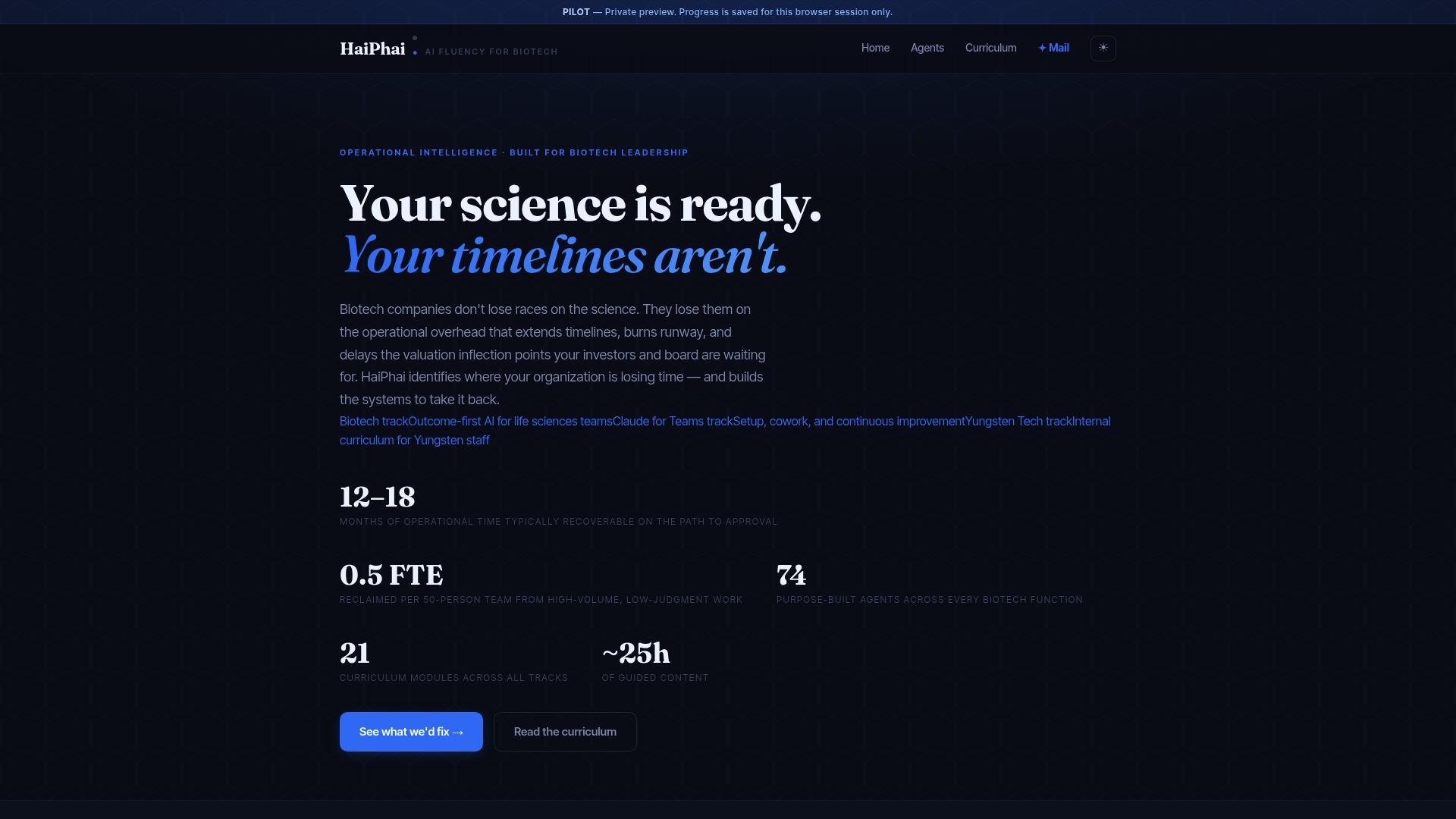
Haiphai works as an operational partner for biotech teams, starting from your strategic goals and working backward to identify where your process is losing time. The platform integrates AI into high-friction workflows like regulatory drafting and clinical site activation, two areas where project managers routinely lose weeks to manual coordination. Clients have reclaimed up to 18 months of operational time on their approval path. For a biotech company managing valuation and funding timelines, that recovery is not a convenience. It is a competitive advantage. Explore what Haiphai can do for your team at haiphai.com.
FAQ
What is life sciences project management?
Life sciences project management is the structured oversight of biotech and pharmaceutical projects, including clinical trials, regulatory submissions, and product launches, to deliver results on time, within budget, and in compliance with regulations.
What certifications do life sciences project managers need?
PMP, CAPM, AgilePM, and PRINCE2 are the most recognized certifications. Pairing one of these with sector-specific training from the Drug Information Association strengthens both credibility and practical knowledge.
How does a project manager differ from a program manager in life sciences?
Project managers execute individual projects within defined scope and timeline. Program managers govern broader portfolios or drug development programs, overseeing resource sharing and strategic alignment across multiple related projects.
How is AI changing life sciences project management?
Generative AI tools are now used for regulatory document drafting, clinical site activation, risk identification, and resource forecasting. The Project Management Institute's research across 14 countries confirms this shift is global and accelerating.
What are the biggest challenges in life sciences project management?
Regulatory complexity, scope creep, cross-functional misalignment, and managing outsourced partnerships are the most common challenges. Poor project management in these areas leads directly to missed deadlines, cost overruns, and damaged client relationships.